Sacred Convergences: Eid al-Adha, Pentecost Sunday, Hajj, and the Call to Religious Freedom
In a rare and meaningful convergence this year, two of the world’s major religious traditions Islam and Christianity observe sacred occasions at nearly the same time. Muslims around the world mark Eid al-Adha and the annual Hajj pilgrimage, while Christians celebrate Pentecost Sunday, commemorating the descent of the Holy Spirit. Though arising from different historical and theological roots, these sacred observances share powerful common values: sacrifice, obedience, spiritual renewal, communal worship, and a deep desire to encounter the Divine. In a world marked by religious misunderstanding and rising tensions, this shared sacred season offers a moment for reflection, unity, and a renewed commitment to the freedom of religion or belief (FoRB) for all people.
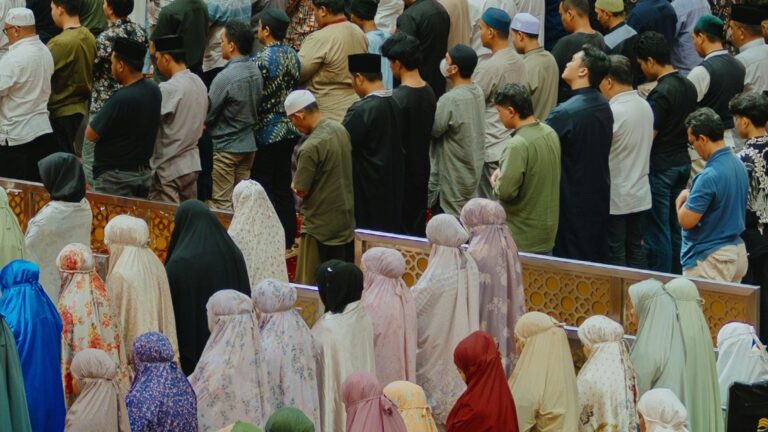
Eid al-Adha, the “Festival of Sacrifice,” commemorates the story of Prophet Ibrahim’s (Abraham’s) readiness to sacrifice his son in obedience to God’s command; a story also honored in the Christian and Jewish traditions. At the last moment, God intervened, replacing the child with a ram and reaffirming that faith, not blood, is the true sacrifice. This powerful narrative forms the spiritual heart of Eid. Muslims mark the occasion with prayers, the symbolic sacrifice of animals, and acts of generosity, especially toward the poor. It is a time when the values of submission, compassion, and selflessness come to the forefront of Muslim life and community.
Closely tied to Eid is the Hajj, the annual pilgrimage to Mecca, which draws millions of Muslims from across the globe. Over several days, pilgrims re-enact sacred stories and rituals that connect them to the lives of Ibrahim, Hajar, and Prophet Muhammad (peace be upon them). Clad in simple white garments that erase distinctions of wealth, race, and nationality, they stand shoulder to shoulder as equals before God. Hajj is not only a journey across distance but a spiritual reset, a calling back to simplicity, humility, and a deeper sense of divine purpose.
At the same time, Christians gather to observe Pentecost Sunday, which marks the moment when the Holy Spirit descended upon the apostles, empowering them to speak in various tongues and boldly proclaim the message of Christ. Occurring fifty days after Easter, Pentecost is often considered the birthday of the Church. The Spirit’s arrival broke down barriers of fear and language, transforming a frightened group of disciples into a courageous, united movement. It is a celebration of divine empowerment, inclusion, and the call to go out into the world with love, justice, and truth.
Although Eid al-Adha, Hajj, and Pentecost emerge from different religious traditions, their underlying themes powerfully intersect. All three speak of the transformative power of divine encounter and human response, of sacrifice made in love and obedience, and of spiritual awakening that leads to service, community, and the pursuit of justice. Each moment calls believers to reflect on their relationship with God, their responsibilities to others especially the marginalized and their role in healing a fractured world.
This convergence is not merely a coincidence of dates. It is a sacred invitation to interfaith solidarity. It also underscores the universal and non-negotiable right of every person to practice their faith freely, without coercion, discrimination, or fear. Freedom of Religion or Belief (FoRB) is more than a political or legal right; it is a deeply spiritual affirmation found in the teachings of both Islam and Christianity. The Qur’an says, “There is no compulsion in religion” (2:256), while the Bible declares, “It is for freedom that Christ has set us free” (Galatians 5:1). FoRB means the right to seek and serve God according to one’s conscience, to worship openly, and to respect the rights of others to do the same.
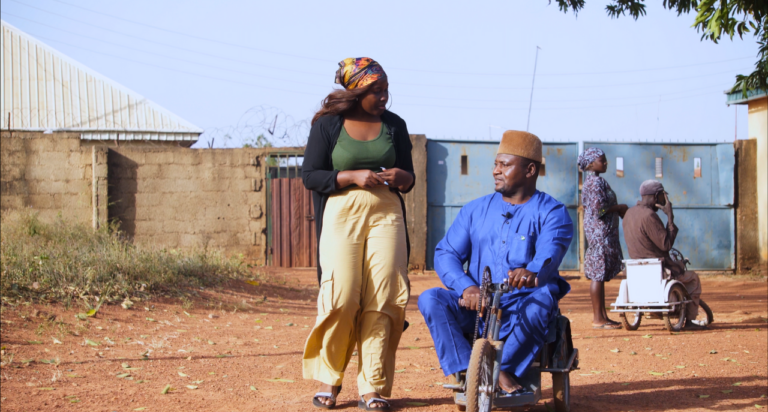
In Nigeria, where the population is divided almost equally between Muslims and Christians, this convergence of Eid al-Adha, Hajj, and Pentecost is not just symbolic, it is deeply personal and practical. Nigeria is a typical interfaith community, where mosques and churches often share the same streets, where families, schools, markets, and neighborhoods are religiously diverse. The lived reality of millions of Nigerians is one of daily interfaith interaction, cooperation, and sometimes tension. This shared sacred season is an opportunity to lean into what already exists: a rich, complex fabric of religious coexistence that, when nurtured, can become a model for the world.
When Muslims and Christians are able to celebrate their sacred seasons side by side, in peace and mutual respect, they bear powerful witness to what FoRB looks like in practice: dignity for all, the protection of religious diversity, and a shared resistance to hate, violence, and exclusion. It is not just about legal protections, it is about creating communities where people of all faiths (or none) can live, speak, and flourish freely.
Imagine communities where Muslim families celebrating Eid al-Adha are greeted with joy by Christian neighbors attending Pentecost services. Imagine interfaith gatherings where shared meals replace suspicion, and joint acts of charity replace hostility. Imagine faith leaders advocating together for the rights of religious minorities in regions where persecution still thrives. These are not distant dreams they are real possibilities born from shared values and the conviction that every human being deserves the freedom to believe.
In a time when religion is too often manipulated to divide or dominate, this shared sacred season reminds us of a better path, a path of encounter, humility, and peace. Whether walking in pilgrimage in Mecca, or lifting hands in praise at Pentecost, people of faith are invited into a deeper truth: that the God who calls us to sacrifice also calls us to freedom, that true worship leads to justice, and that no one should ever be denied the right to follow the path of conscience.
As Muslims proclaim “Allahu Akbar” in Mina and Christians cry “Come, Holy Spirit” in their churches, may we all hear the whisper of a divine call to walk together, to defend the freedom of belief, and to build a world where faith is not a source of fear but a fountain of peace.
Eid Mubarak. Happy Pentecost. May freedom and peace be upon us all.